


Have you ever wondered about the true optical performance hidden behind a lens's marketing specifications? As an optical engineer, I dive deep into patent data and design values to uncover the reality of modern optics.
Today, we analyze the NIKKOR Z 24-50mm f/4-6.3, a lens that challenges the traditional definitions of "standard" and "wide-angle."
1. Lens Overview & Heritage
The NIKKOR Z 24-50mm is a unique beast. While 24mm is common for modern zooms, stopping at 50mm feels nostalgic. It reminds me of the classic Ai Zoom Nikkor 25-50mm f/4S (1981), from an era when wide-angle design was still a formidable challenge.
The "Collaborative" Origin?
My investigation through the Japan Patent Office (J-PLATPAT) revealed patent JP-A-2021-189377. Interestingly, the application lists both Nikon and Konica Minolta.
This suggests a strategic collaboration. Furthermore, the "Made in China" mark on the mount—unusual for Nikon’s primary Thai facilities—hints at a production line influenced by this partnership. For long-time photography fans, this "double-name" heritage adds a layer of emotional value to this affordable optic.
2. Optical Design & Zoom Structure
Despite its entry-level positioning, the internal structure is surprisingly sophisticated:
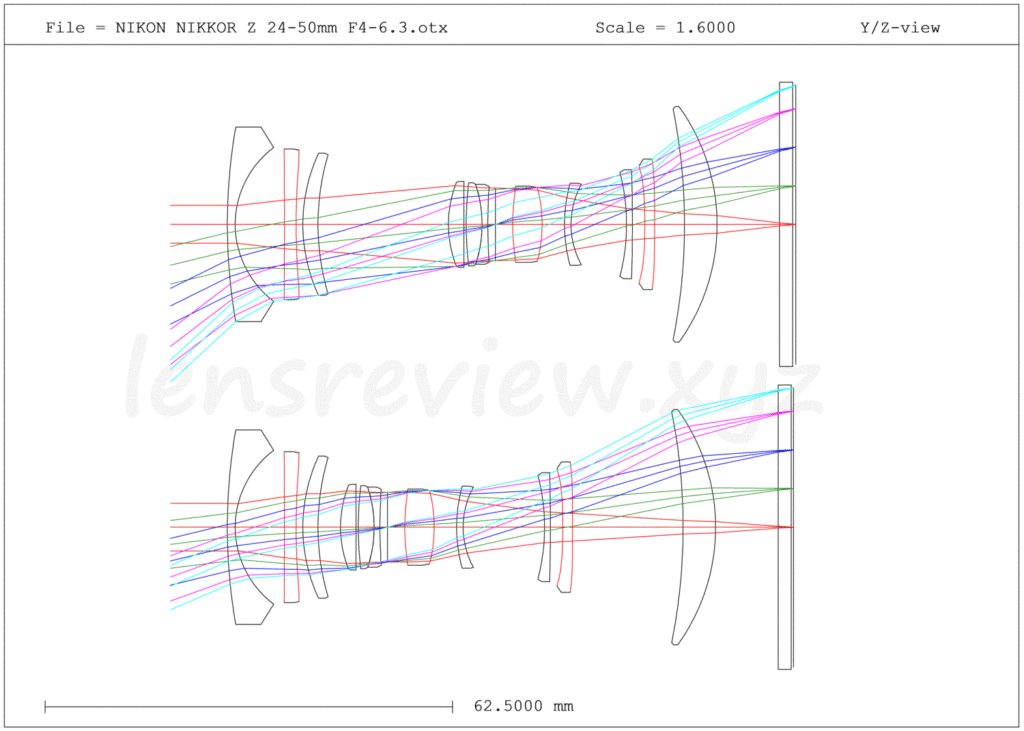
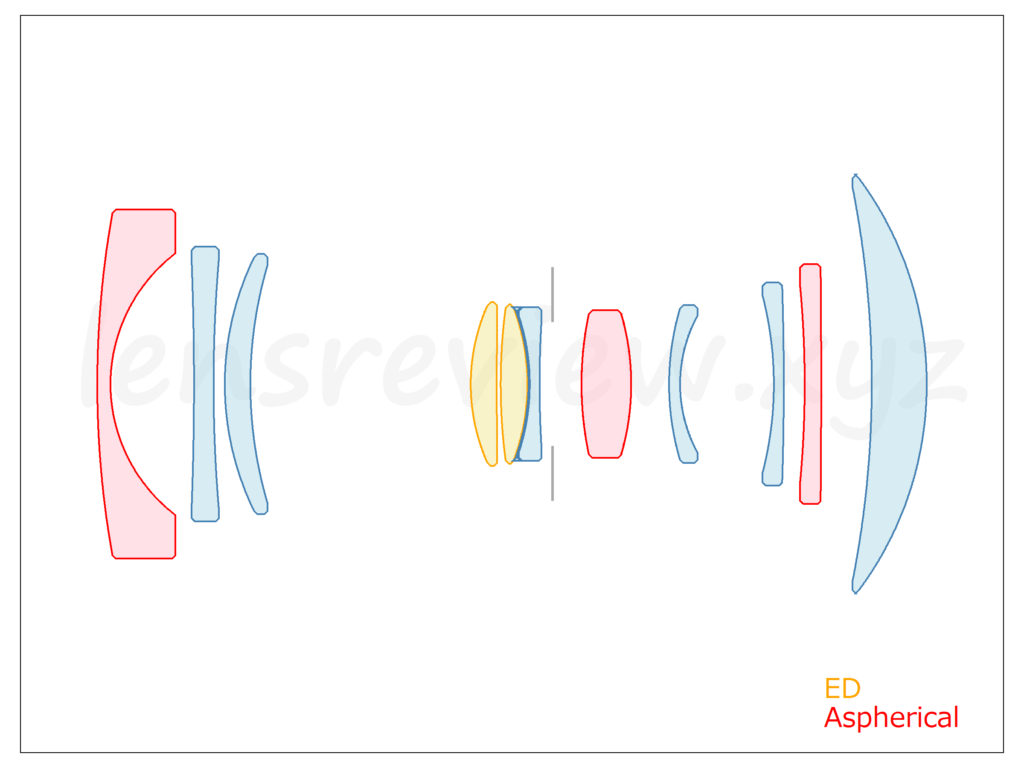
- Elements: 11 elements in 10 groups.
- Specialty Glass: 3 Aspherical lenses and 2 ED (Extra-low Dispersion) glass elements.
This reminds me of a famous Nikon engineer's philosophy:
"We must never cut corners on entry-level lenses. For many, this is their first and only NIKKOR." This lens truly embodies that spirit.
Zoom and Focus Mechanism
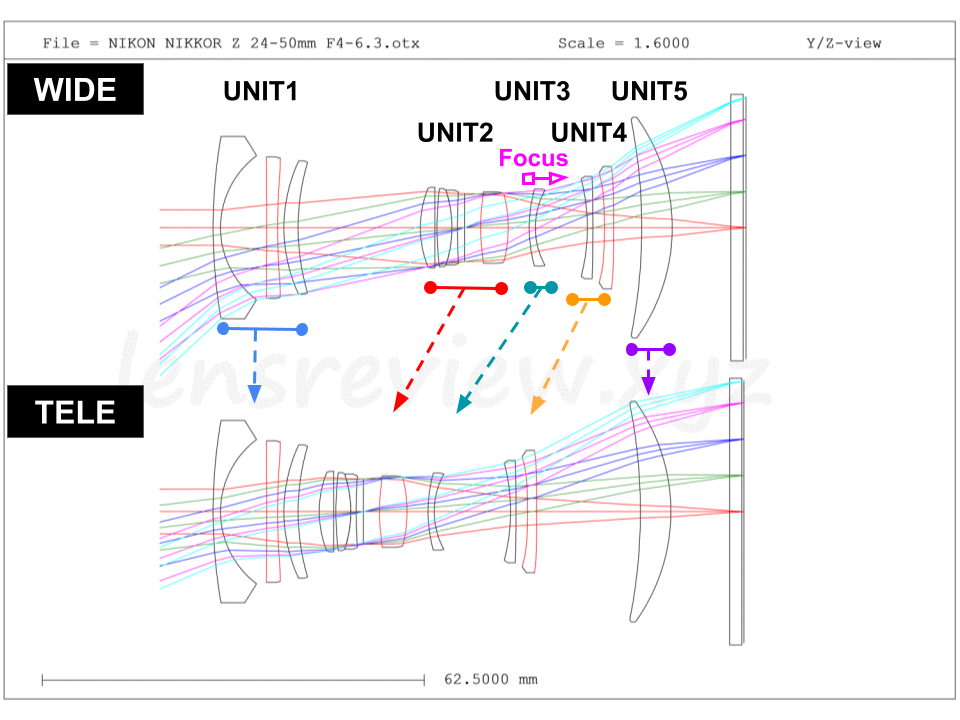
The lens utilizes a 5-unit zoom configuration. The first unit moves in a slight concave trajectory from wide to telephoto, following a "negative-lead" (retrofocus) type structure common in wide-angle zooms. The third unit serves as the focusing group, operating independently of the zoom movement.
The Retractable Mechanism
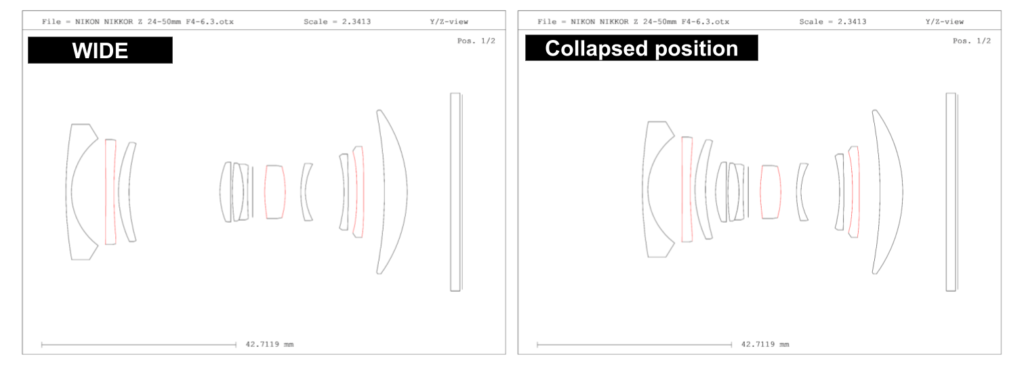
By rotating the zoom ring, the lens retracts into a highly portable "Collapsed Position." This design drastically reduces the physical length, making it an ideal companion for travel and street photography without sacrificing mechanical integrity.
3. Analysis of Longitudinal Aberrations
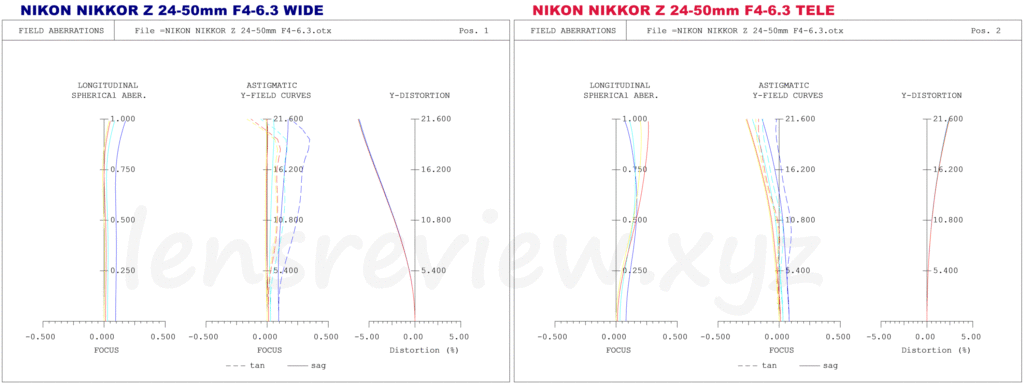
Spherical Aberration & Axial Chromatic Aberration
Looking at the d-line (yellow), spherical aberration is extremely minimal at the wide end (24mm). At the telephoto end (50mm), it shows a slight outward bulge toward the positive side.
Regarding Axial Chromatic Aberration, a characteristic amount of color fringing remains at both ends. However, because the lens has a relatively slow F-number (f/4-6.3), the ray angles are shallow. From a spot-diagram perspective, this means the actual impact on image quality is significantly lower than the graphs might suggest.
Field Curvature & Distortion
- Field Curvature: The flatness across the frame is not perfectly zero but remains within a very reasonable range for its class.
- Distortion: At 24mm, we expect significant barrel distortion, while 50mm would naturally show pincushion distortion. These are clearly designed to be corrected via modern in-camera image processing.
- Lateral Chromatic Aberration: Some fringing is present at both ends, which is also typically handled by digital compensation.
4. Transverse Aberration Analysis
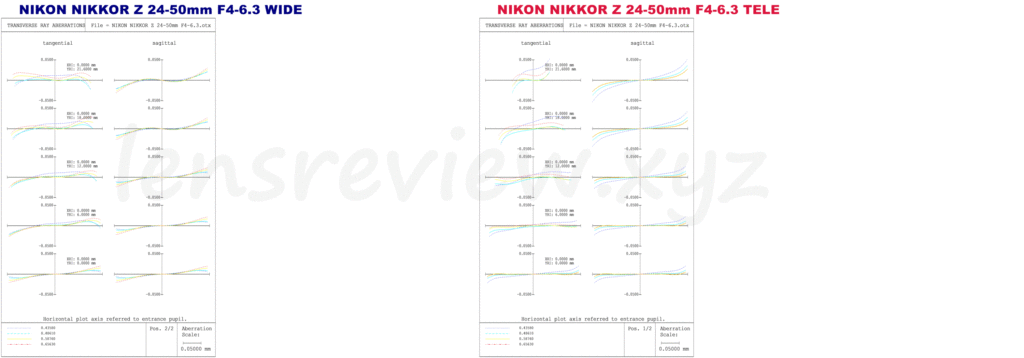
The transverse (lateral) aberrations provide a look at how light rays converge at specific points in the frame.
- Tangential Direction: At the wide end, some coma aberration (asymmetry) remains, but the performance exceeds expectations for a lens in this price bracket.
- Sagittal Direction: At the telephoto end, sagittal coma flare becomes noticeable once the image height exceeds 18mm (toward the corners), which may affect the rendering of point light sources in the periphery.
5. Spot Diagram Analysis (Optical Simulation)
In this section, we examine the actual behavior of light rays through optical simulation.
Standard Scale (±0.3mm)
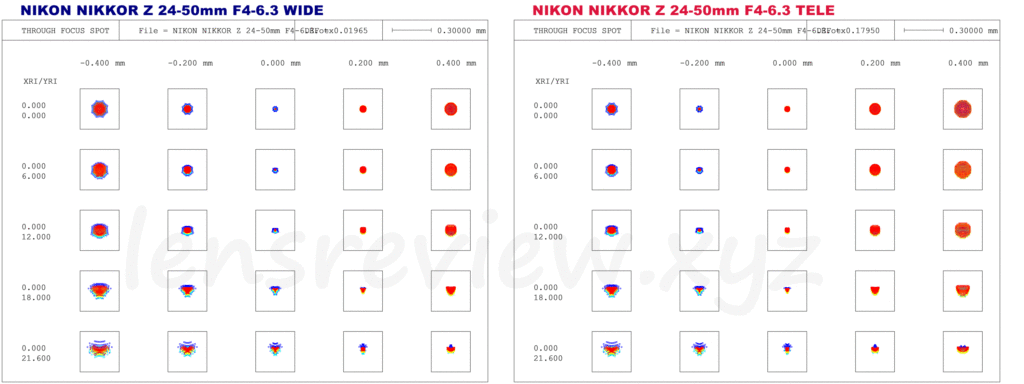
The spot diagrams appear remarkably clean. While the longitudinal graphs showed some residual aberration, the actual ray convergence is excellent. This is the benefit of the modest F-number; the suppressed ray angles result in a tight, well-defined focus spot.
Detailed Scale (±0.1mm)
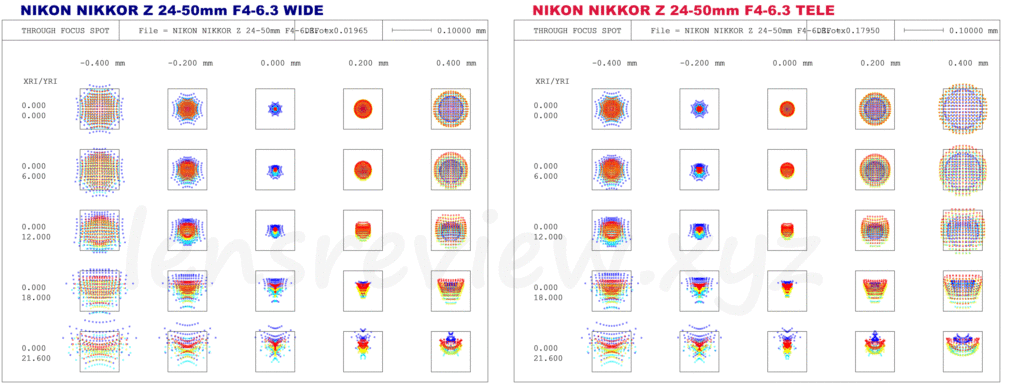
Magnifying the scale reveals the finer details:
- Center: The focus point is extremely sharp and concentrated.
- Periphery (Image Height >18mm): Some blurring and asymmetry appear. However, given the compact design, the overall balance of resolution is impressively maintained.
6. MTF Performance (Resolution Analysis)
Performance at Maximum Aperture (Wide-Open)
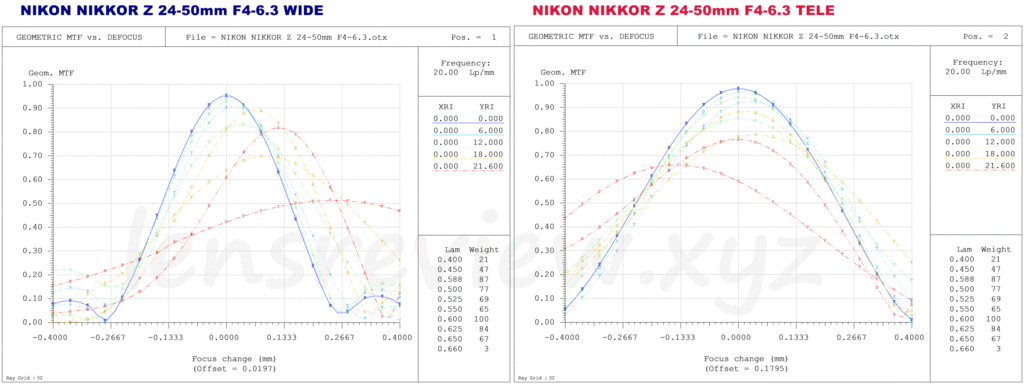
At the maximum aperture, the center resolution (indicated by the blue lines) is outstandingly high. As we approach the 18mm image height, the peak performance shifts slightly. While this might result in a subtle perception of "soft corners" or a focus shift in the periphery, it is easily corrected with a minor adjustment to the aperture.
Performance when Stopped Down (f/8.0)
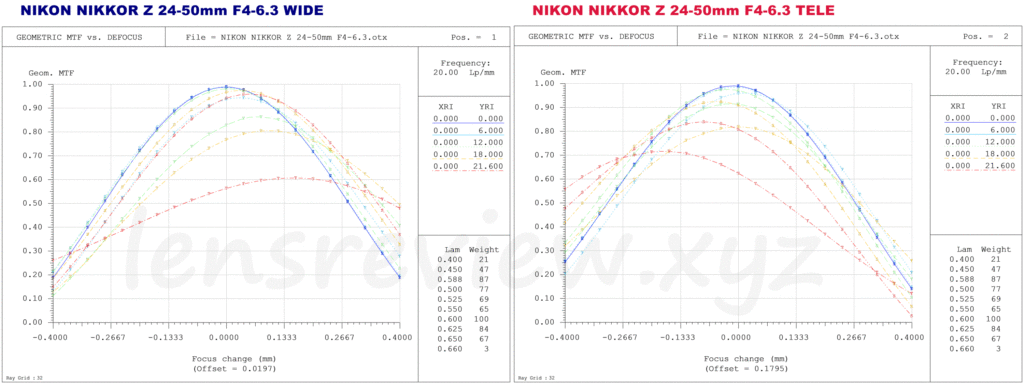
Generally, stopping down the aperture cuts off peripheral light rays that contribute to aberrations. By stopping down to f/8.0, the resolution across the entire frame—from the center to the extreme corners—is significantly improved, providing crisp, professional-level results.
Conclusion: An Underrated Gem
The NIKKOR Z 24-50mm f/4-6.3 is more than just a "kit lens." It is a masterpiece of compact engineering, born from a surprising collaboration. Whether you appreciate it for its portability or its historical connection to the Nikon-Konica Minolta legacy, it offers a rich and high-quality photographic experience.
Product Specifications
| Feature | Details |
| Angle of View | 84° - 47° |
| Lens Construction | 11 elements in 10 groups |
| Minimum Aperture | f/22 - 36 |
| Min. Focus Distance | 0.17m |
| Filter Thread | 52mm |
| Weight | 195g |
| Release Date | August 28, 2020 |
Author: Jin Takayama Professional Optical Designer with years of experience in lens engineering. Owner of a small optical design office and a dedicated grandfather.

