


Introduction
For photography enthusiasts and professional creators alike, high-magnification zoom lenses have historically occupied a somewhat conflicted position. Often colloquially dismissed as mere "convenience zooms," they were long praised for their undeniable versatility in the field but heavily criticized for compromising pure optical performance. However, with the advent of the mirrorless era, short flange focal distances and advanced optical manufacturing techniques have completely rewritten this narrative.
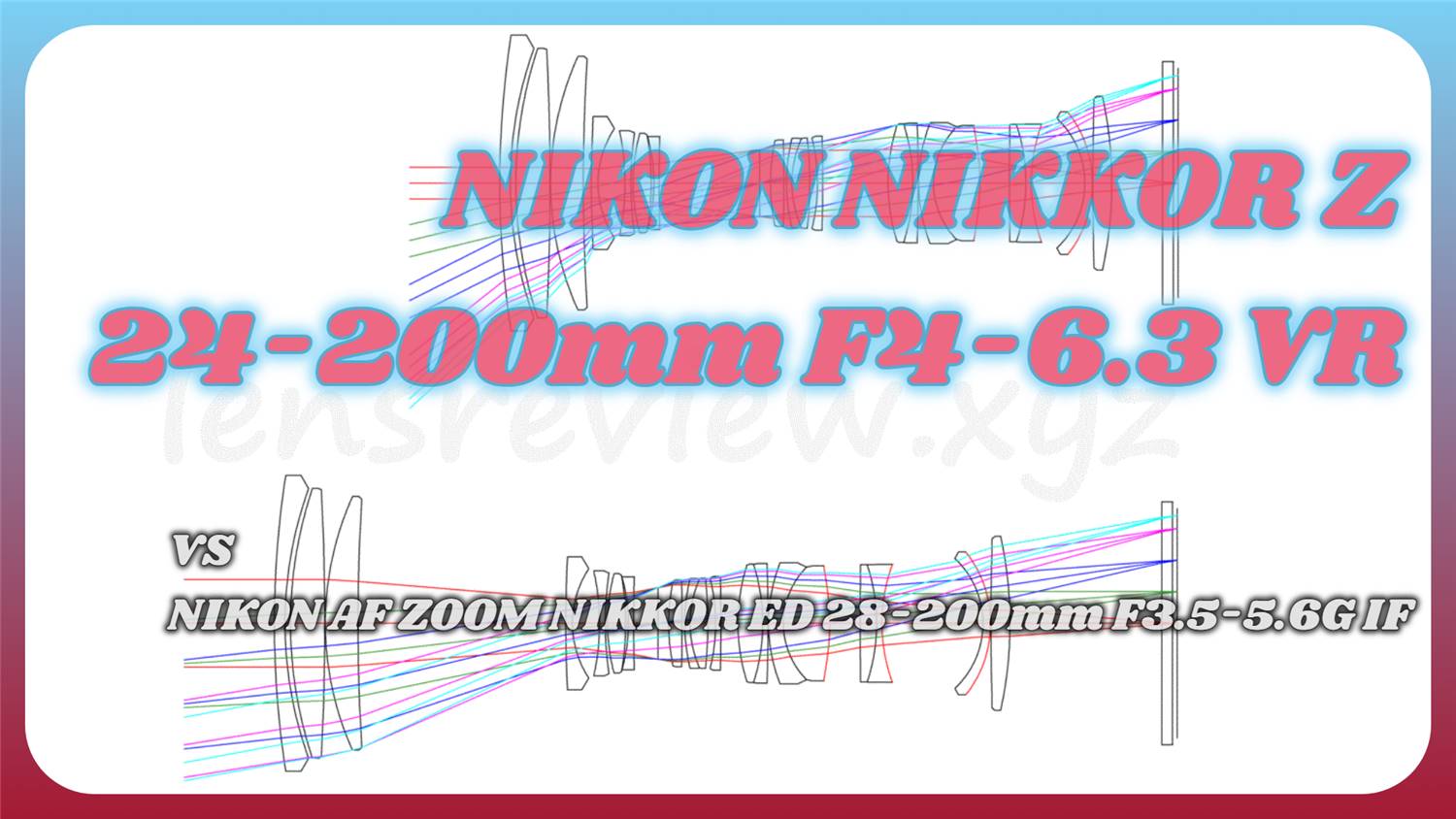
In this deep dive, we will meticulously dissect the optical blueprint of the NIKON NIKKOR Z 24-200mm F4-6.3 VR (released July 3, 2020), a mirrorless standard that challenges the traditional limitations of travel optics. To grasp the true magnitude of its evolutionary leap, we will conduct a comparative analysis against its direct F-mount spiritual predecessor, the AF ZOOM NIKKOR ED 28-200mm F3.5-5.6G IF (released September 13, 2003). By tracing the 20-year lineage of Nikon’s high-magnification engineering—spanning historical milestones like the Ai ZOOM NIKKOR 35-200mm F3.5-4.5S (1985), the Ai AF ZOOM NIKKOR 28-200mm F3.5-5.6D IF (1998), and the AF-S NIKKOR 28-300mm F3.5-5.6G ED VR (2010)—we will uncover how Nikon transformed the jack-of-all-trades travel companion into an uncompromising master of resolution.
Patent Literature Context
Unlocking the ultimate realities of optical performance requires analyzing the foundational blueprints left by the lens designers themselves.
For our comparative benchmark, the F-mount AF ZOOM NIKKOR ED 28-200mm F3.5-5.6G IF, the historical records point directly to Japanese Patent Application JP2002-323655A. A rigorous evaluation confirms that Embodiment 1 within this patent serves as the direct mathematical twin to the production lens configuration.
Conversely, tracing the design origins of our main subject, the NIKKOR Z 24-200mm F4-6.3 VR, presented a fascinating engineering puzzle. Initial research naturally gravitated toward the F-mount superzoom, the AF-S NIKKOR 28-300mm F3.5-5.6G ED VR, which points to JP2010-175899A (Embodiment 2). However, attempting to digitally reconstruct and simulate that specific prescription revealed an insurmountable anomaly: surface number 27 (a cemented interface) was documented as an aspherical surface. In standard practical optical design, implementing an aspherical profile at a cemented boundary yields almost zero aberration correction capability because the refractive index differential across the interface is negligible. Light rays do not bend efficiently under such parameters, making it an obvious typographical error in the original patent filing.
By steering clear of that unresolvable data, we successfully tracked the definitive design root of the Z-mount lens to International Patent Publication WO2020/157904A. A comprehensive analysis reveals that Embodiment 1 beautifully mirrors the physical element distribution and specifications of the retail product. The following analyses are built on these highly authenticated simulation models.
Disclaimer: The design parameters utilized herein are reconstructed based on rigorous analysis of relevant patent documentation and proprietary lens simulation models. They are intended for educational and analytical purposes, and do not guarantee an absolute 1:1 match with commercial production samples.
Lens Specifications & Scaling Philosophy
Before delving into the aberration curves, let us examine the core physical profiles of both contenders:
| Specification | AF ZOOM NIKKOR ED 28-200mm F3.5-5.6G IF (F-Mount) | NIKKOR Z 24-200mm F4-6.3 VR (Z-Mount) |
| Angle of View | 74.0° – 12.2° | 84.0° – 12.2° |
| Lens Configuration | 11 elements in 12 groups | 15 elements in 19 groups |
| Minimum Aperture | F22 | F22 – F36 |
| Minimum Focus Distance | 0.44m | 0.5m – 0.7m |
| Filter Diameter | 62mm | 67mm |
| Total Length | 71mm | 114mm |
| Maximum Diameter | 69.5mm | 76.5mm |
| Weight | 360g | 570g |
| Release Date | September 13, 2003 | July 3, 2020 |
Proportional Scaling Philosophy
To maintain the scientific integrity and objectivity that defines this blog, a brief methodological note is required. When analyzing and comparing optical systems across different eras or sensory form factors (such as comparing legacy SLR configurations to short-flange mirrorless layouts, or evaluating non-35mm formats), all geometric parameters and longitudinal dimensions are subjected to a rigorous Proportional Scaling Framework. By standardizing longitudinal dimensions and translating aberration metrics back into a unified 35mm Full-Frame reference scale, we systematically eliminate the visual distortions caused by disparate base dimensions, allowing for a perfectly fair, mathematically normalized comparison of raw optical design capability.
Cross-Sectional Optical Path
By plotting the ray-tracing paths of both configurations, we can see the dramatic paradigm shift brought about by the Nikon Z mount.
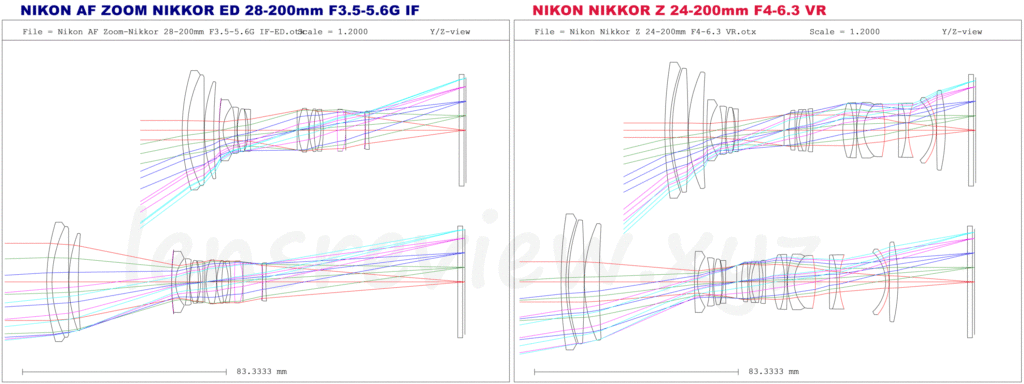
Looking closely at the layout, the structural disparity is immediately apparent. The legacy F-mount lens (represented in Blue/Left for Wide, and Tele below) features an enormous void between the rear-most lens element and the image sensor plane—a large back-focal distance structurally dictated by the mechanical clearance required for a physical SLR reflex mirror box. This restriction forces the optical power forward, pushing the physical elements toward the front of the barrel and creating a top-heavy, "front-loaded" layout.
In stark contrast, the Z-mount lens (represented in Red/Right) fully exploits its mirrorless architecture. Lens elements are allowed to sit mere millimeters from the sensor surface, establishing an impeccably balanced distribution of glass mass across the entire length of the chassis.
Let us zoom in on the Wide-angle end layout to inspect the exact glass composition utilizing our custom drawing software.
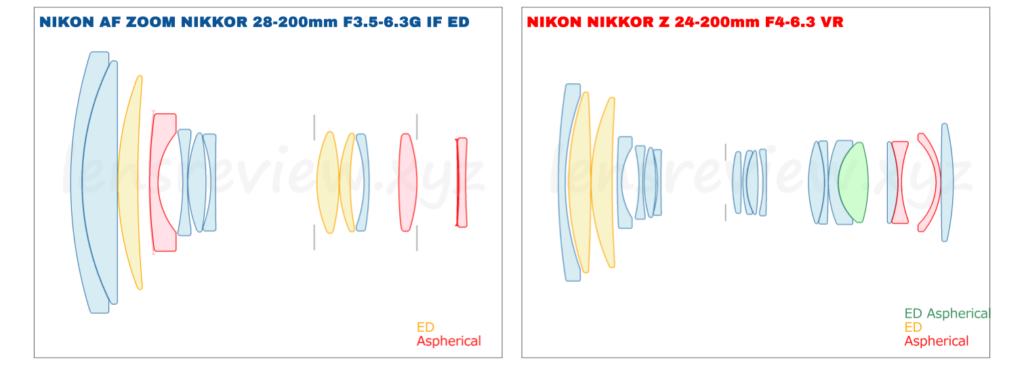
The F-mount lens utilizes an 11-group, 12-element configuration. For its time (2003), it was a remarkably luxurious layout, integrating 3 Extra-low Dispersion (ED) glass elements to fight chromatic aberration and 3 Aspherical elements to tame spherical distortion and field curvature. To contextualize how premium this was, the legendary AF NIKKOR 28-70mm F2.8D released in 1999 incorporated only 1 Aspherical element and 2 ED elements. This highlights just how notoriously difficult it was to correct a superzoom in the film and early digital SLR eras.
The Z-mount optic raises the stakes significantly, opting for a highly complex 15-group, 19-element layout. It deploys 2 ED elements alongside 2 specialized Aspherical elements. Crucially, it integrates an elite, high-cost component: an ED Aspherical element (an element possessing both extra-low dispersion properties and a non-spherical profile). This dual-nature glass element executes high-level correction of chromatic and spherical aberrations simultaneously within a single layout node. Most notably, Nikon engineers strategically concentrated large-diameter ED glass elements into the second and third positions of the front lens group. Eliminating chromatic aberrations at the largest apertures early in the optical path ensures maximum clean light propagation down the barrel.
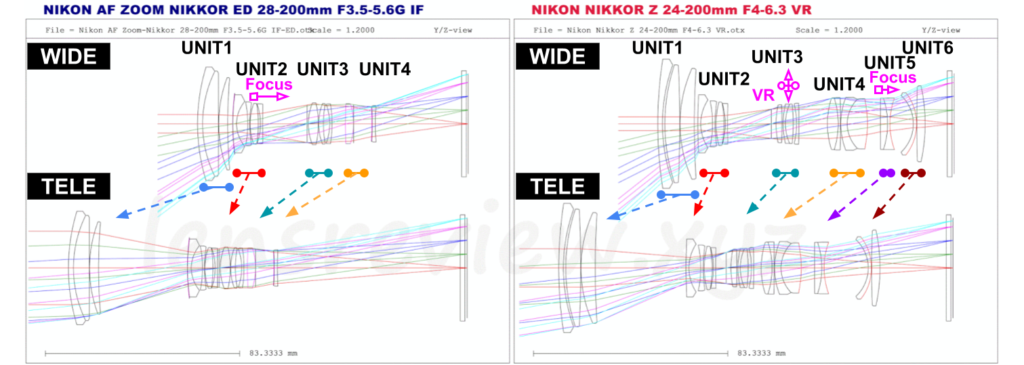
The mechanical zooming mechanics reveal another major leap in sophistication. The F-mount lens achieves its focal range through a 4-unit zoom group structure, whereas the Z-mount lens implements a highly precise 6-unit zoom movement system.
Both systems utilize a Positive-Group Leading Type mechanism, where the first lens group (Unit 1) possesses a net positive (converging) focal length and physically extends forward as the focal length moves from Wide to Tele. This configuration operates as a classic telephoto type layout, which shrinks the physical size of long-focus lenses by using the converging power of the front elements to compress the overall length.
Furthermore, the Z-mount lens assigns Unit 5 as a dedicated internal focusing unit, operating independently from the main zoom cams to achieve rapid, silent autofocus. Unit 3 encapsulates the specialized Vibration Reduction (VR) stabilization group, which shifts laterally at high speed to counteract camera shake in real-time.
Comprehensive Aberration Analysis
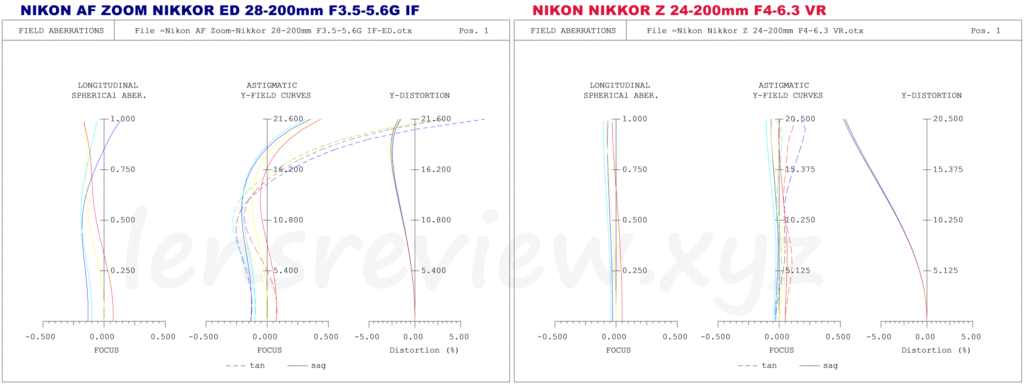
Let us transition to the raw physical data by examining the Longitudinal Aberration charts.
Wide-angle end
Telephoto end
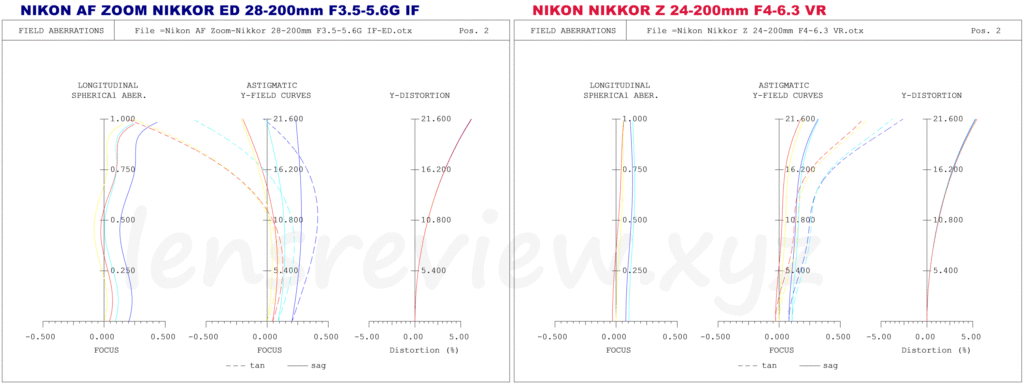
Spherical Aberration
Spherical aberration dictates the foundational resolution at the center of the frame and the qualities of the background bokeh. At both the Wide and Telephoto ends, the legacy F-mount lens shows substantial deviation, indicating significant residual spherical error that causes a classic soft-glow veil at open apertures. The Z-mount lens completely corrects this, flattening the curve almost perfectly to the ideal zero-axis line.
Axial Chromatic Aberration
Axial chromatic aberration governs central color fringing along the longitudinal axis. While the Z-mount lens does not completely eliminate this artifact due to the extreme physical strains of its 8.3x zoom ratio, it restricts the dispersion tightly. The color tracking remains exceptionally stable across the spectrum, keeping axial fringing well below practically perceivable thresholds.
Field Curvature
Field curvature measures the flat-field rendering performance across the image circle. At the 24mm Wide end, despite pulling out to a significantly wider field of view than the 28mm F-mount predecessor, the Z-mount lens displays remarkably flat, well-controlled tangential and sagittal planes. At the 200mm Telephoto end, the Z-mount curves show some apparent bending; however, given the lens's slower F6.3 variable aperture, this slight curvature is safely neutralized by the system's natural depth of field—a reality we will confirm in the MTF analysis.
Distortion
Distortion dictates the geometric straightness of lines across the frame. At the Telephoto end, both lenses present similar moderate levels of positive pincushion distortion, which causes straight lines to bend slightly inward. At the Wide-angle end, however, the Z-mount lens shows a massive surge in negative barrel distortion. This design choice confirms that modern Nikon engineers deliberately offloaded geometric distortion management to the camera's real-time digital image processing engine, freeing up the optical glass configuration to focus entirely on correcting uncorrectable high-order resolution aberrations.
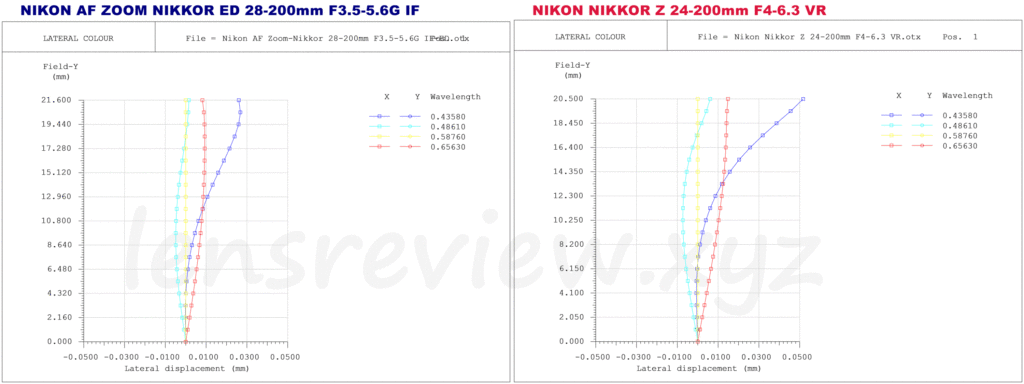
Lateral Chromatic Aberration
Also known as Chromatic Aberration of Magnification, this metric reflects off-center color fringing at the periphery of the frame.
Wide-angle end
Telephoto end
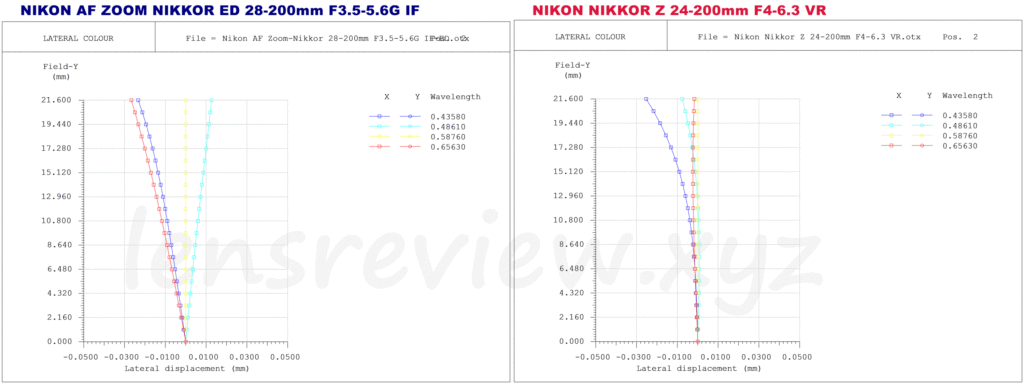
At the Telephoto end, the Z-mount lens exhibits superior correction over the F-mount predecessor. However, at the Wide end, the Z-mount lens allows an increase in lateral color dispersion. Much like geometric distortion, this specific aberration is easily corrected via profile-based digital post-processing, signifying a strategic design trade-off to maximize raw micro-contrast.
Lateral Aberration
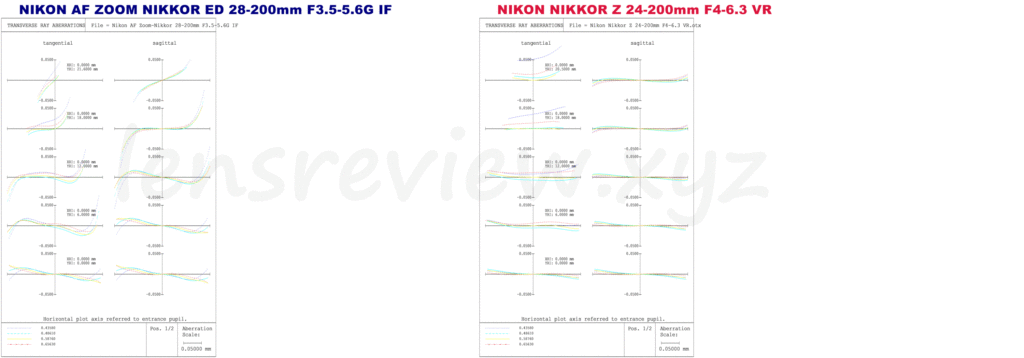
Also designated as Transverse Aberration, this metric tracks the exact fractional coordinate breakdown of light rays arriving across the Tangential and Sagittal planes.
Wide-angle end
Telephoto end
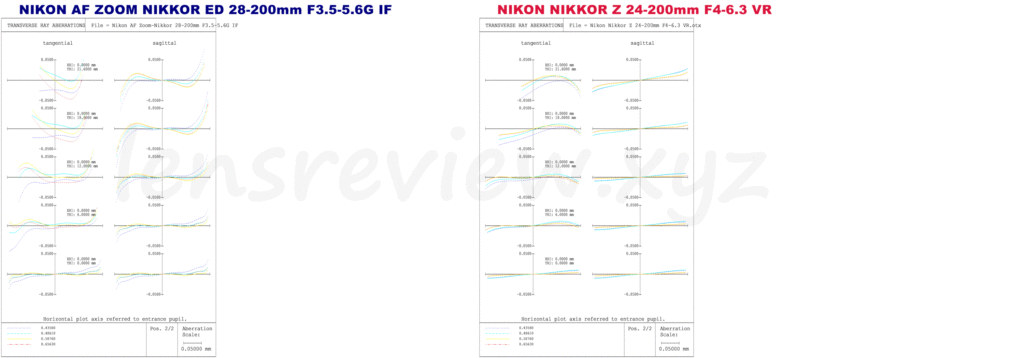
In the left-column Tangential plots, both the Wide and Telephoto configurations of the Z-mount lens demonstrate a massive reduction in asymmetrical coma flares compared to the older F-mount lens. The wide-angle g-line (blue wavelength) shows an isolated deviation, which matches the digital-reliance strategy for lateral color correction. More importantly, looking at the right-column Sagittal plots, the Z-mount lens achieves phenomenal stabilization, eliminating sagittal coma flare almost entirely. This flat profile provides a powerful foundation for outstanding MTF scores.
Spot Diagram Analysis
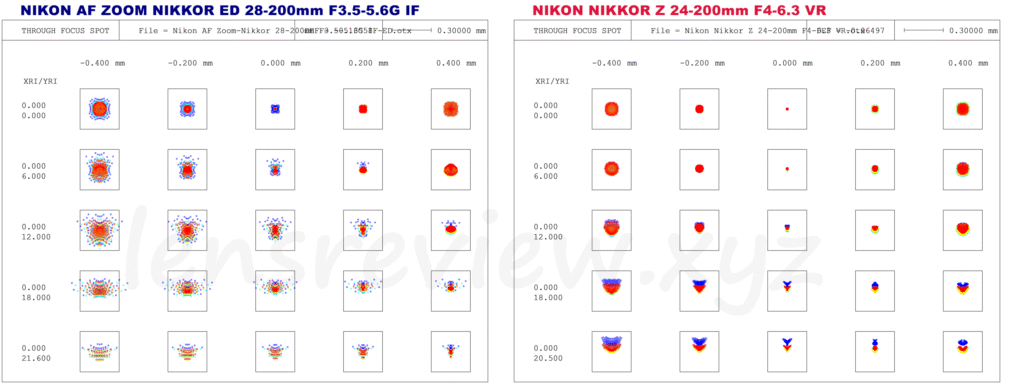
To visualize how these mathematical curves manifest in actual image capture, we simulate the geometric distribution of light rays hitting the sensor plane across various image heights (0.0mm center to 21.6mm extreme corner).
Standard Scale 0.3 Evaluation
First, let us evaluate the performance using our consortium's absolute macro metric: the Standard Scale 0.3.
Wide-angle end
Telephoto end
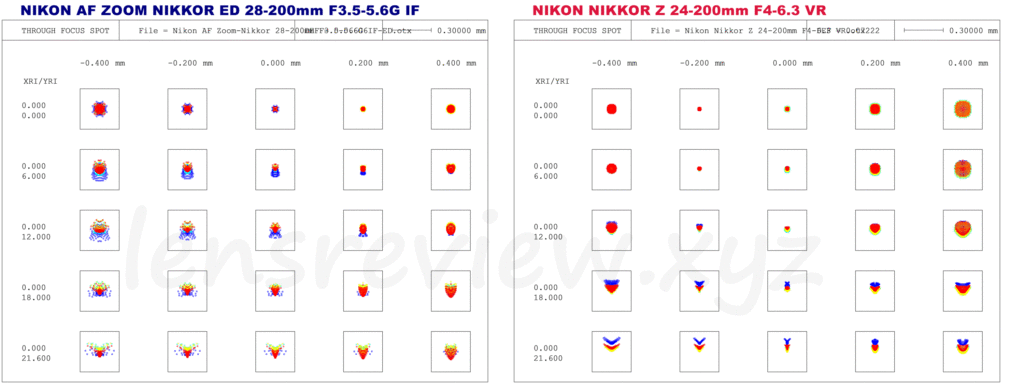
Under this standard magnification, the Z-mount lens appears incredibly immaculate. The physical scatter of rays is compressed so tightly that the individual spot diagrams are barely visible within the grid boxes, signaling a vast generational leap in overall structural sharpness over the sprawling ray flares of the F-mount design.
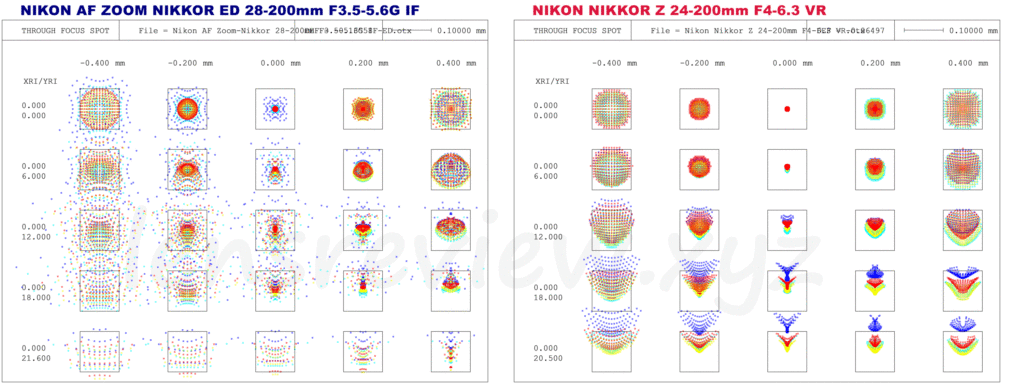
Detail Scale 0.1 Evaluation
To reveal the fine structures of the core image nuclei and micro-contrast potential, we increase the simulation magnification to our definitive Detail Scale 0.1.
Wide-angle end
Telephoto end
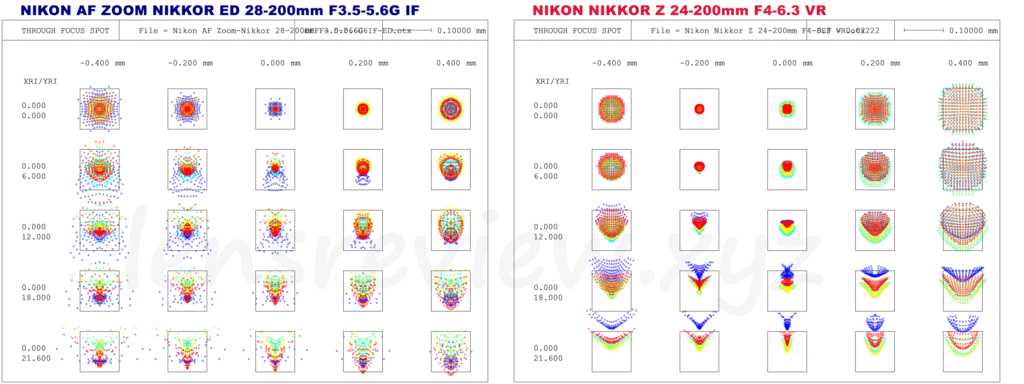
Under this high-magnification view, the inner mechanics of the Z-mount lens reveal themselves. At the center and mid-frame zones, the core ray density is remarkably concentrated, ensuring razor-sharp rendering. As we move out past an image height of 18mm into the extreme corners, we notice the individual color components (wavelength spots) begin to split and separate laterally. This visualizes the physical manifestation of the lateral chromatic aberration noted earlier. Because this separation is purely lateral and highly linear, it is seamlessly neutralized by modern in-camera firmware, leaving a highly resolving corner profile.
MTF Performance
Finally, let us look at the definitive quantitative evaluation: the Modulation Transfer Function (MTF) simulation, plotting contrast performance from the center to the edge of the frame. Given the slower focal ratios of these superzooms, the defocus range is expanded to ±0.4mm (four times our standard test setting) to properly account for the expanded depth of field.
Open Aperture Performance (Maximum Aperture)
We begin by evaluating both optics completely wide open at their respective maximum apertures. For the Wide end, this pits the F-mount at F3.5 against the Z-mount at F4.0. For the Tele end, both are evaluated at their limits: F5.6 versus F6.3.
Wide-angle end
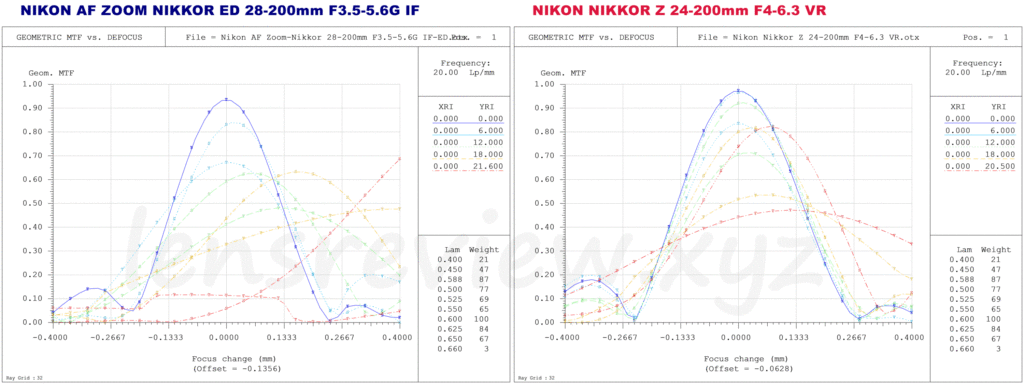
Telephoto end
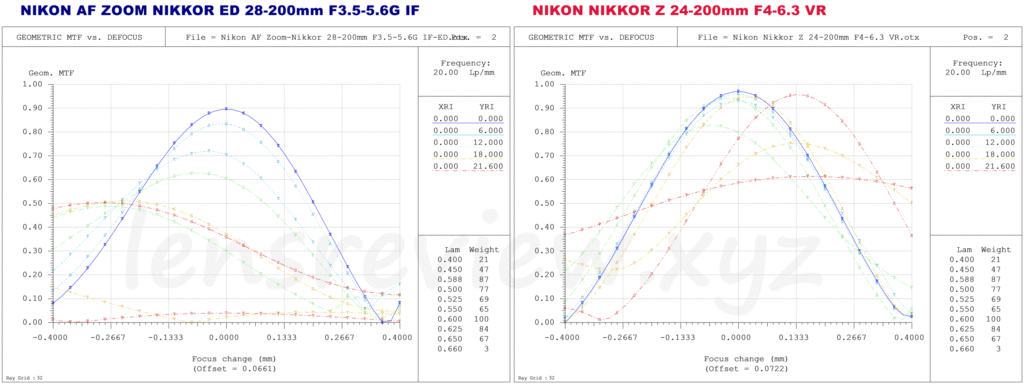
Looking at the solid blue lines representing the central resolution, the NIKKOR Z 24-200mm establishes a commanding lead. At both the Wide and Telephoto ends, the Z-mount lens maintains an exceptionally high contrast plateau stretching from the center out to the mid-periphery. The sag of the F-mount curves due to residual spherical aberration and coma is entirely absent here. Even with the slight field curvature noted earlier at 200mm, the MTF remains exceptionally high because the deeper F6.3 aperture envelope naturally absorbs the deviation.
Stopped Down Performance (Small Aperture at F8.0)
Next, let us observe the systems when stopped down to a standard small-aperture setting of F8.0. Generally, closing down the aperture cuts away peripheral aberrated rays, allowing legacy lenses to recover performance.
Wide-angle end
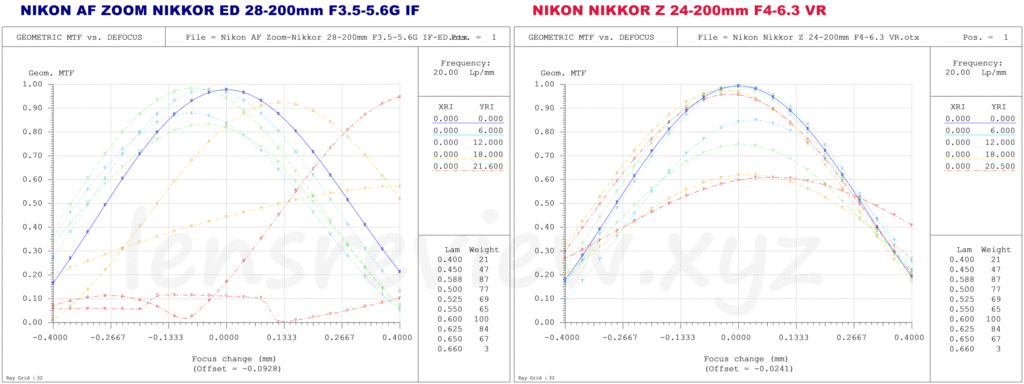
Telephoto end
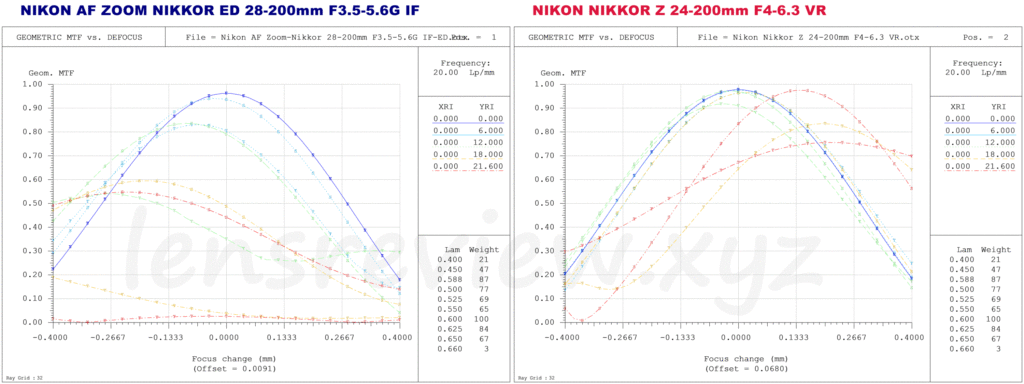
When restricted to F8.0, the legacy F-mount lens does show noticeable improvement as its high-order aberrations are stopped down. However, because the NIKKOR Z 24-200mm F4-6.3 VR already delivers near-peak performance wide open, stopping it down to F8.0 pushes its MTF curves almost completely flat against the diffraction-limited theoretical ideal line. It delivers uniform, high-fidelity resolution across the entire frame.
Conclusion
High-magnification zoom lenses were once viewed as a compromise—highly convenient tools for travel, vacation, and fast-paced event recording, but fundamentally locked out of true high-fidelity performance.
Our deep dive into the NIKKOR Z 24-200mm F4-6.3 VR reveals that Nikon’s modern engineering team has shattered this stereotype. By fully utilizing the short flange distance of the Z-mount, implementing complex 6-unit zoom adjustments, incorporating premium dual-nature ED Aspherical glass, and smartly delegating linear aberrations like distortion to real-time digital processing, they have created what can only be described as a "Perfect Zoom."
It bridges the historic gap between convenience and pure resolution, proving that a single travel lens can deliver professional-grade sharpness across an expansive 8.3x focal range. For photographers navigating dynamic environments where changing lenses is impossible, this optic stands as an absolute triumph of modern optical design.
Analysis by Jin Takayama (Chairman, Lens Review Consortium)

