



In this article, I will provide a rigorous technical analysis of the SIGMA 50mm F1.2 DG DN Art, the latest flagship standard prime lens in the Art series for full-frame mirrorless cameras.
As a professional optical designer with over 40 years of experience, I aim to go beyond surface-level reviews. By analyzing patent data and utilizing advanced optical simulations, I will reveal the "true" performance of this lens—the invisible design intent behind its rendering.
This article includes affiliate links, but the content is based entirely on the author's independent research.
Lens Overview
The SIGMA Art series, which began in 2012, has consistently pushed the boundaries of high-performance optics. While major camera manufacturers introduced F1.2 standard lenses for their mirrorless systems, the photography world waited with high expectations for SIGMA’s response.
Released in 2024, the SIGMA 50mm F1.2 DG DN Art is not just about a large aperture; it is a lens that balances supreme resolution with a remarkably lightweight design (745g), achieving a significantly higher degree of portability than its competitors while maintaining the uncompromising "Art" philosophy.
Patent Research
Prior to its release, several designs for high-speed 50mm lenses appeared in SIGMA's patent filings. Based on my technical analysis, the optical configuration of this lens is highly likely related to Japanese Patent Application 2025-124346.
Specifically, "Example 1" in the patent document describes a system utilizing dual HLA (High-response Linear Actuator) focus groups. This design is focused on maintaining high optical performance throughout the focus range while significantly reducing focus breathing—a critical requirement for modern hybrid shooting.
Design Value Analysis
Optical Path Diagram
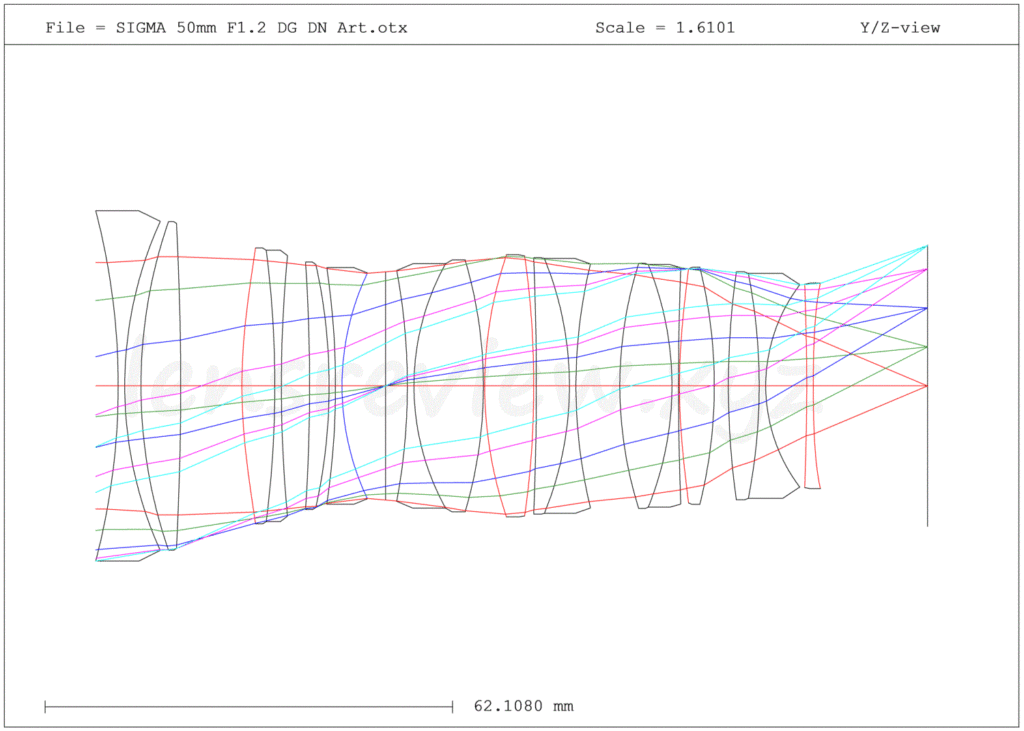
The lens construction consists of 17 elements in 12 groups, including three aspherical lenses. This layout reflects a modern mirrorless-optimized design where the rear elements are significantly larger than traditional SLR designs, allowing for telecentric light paths that maximize sensor performance.
Longitudinal Aberrations
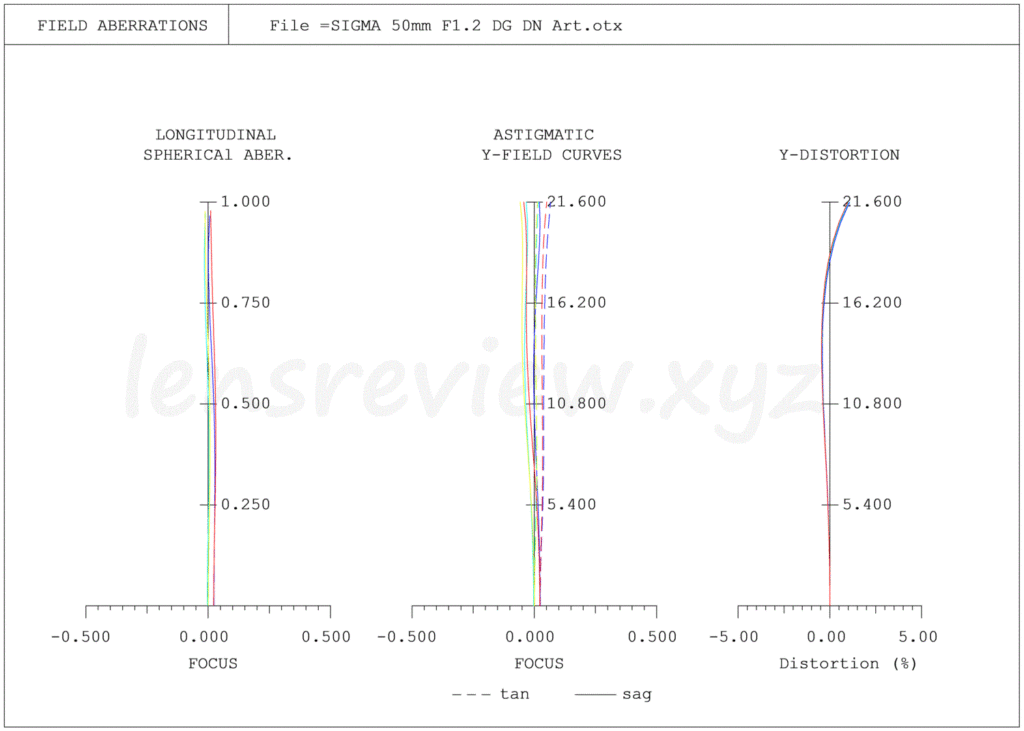
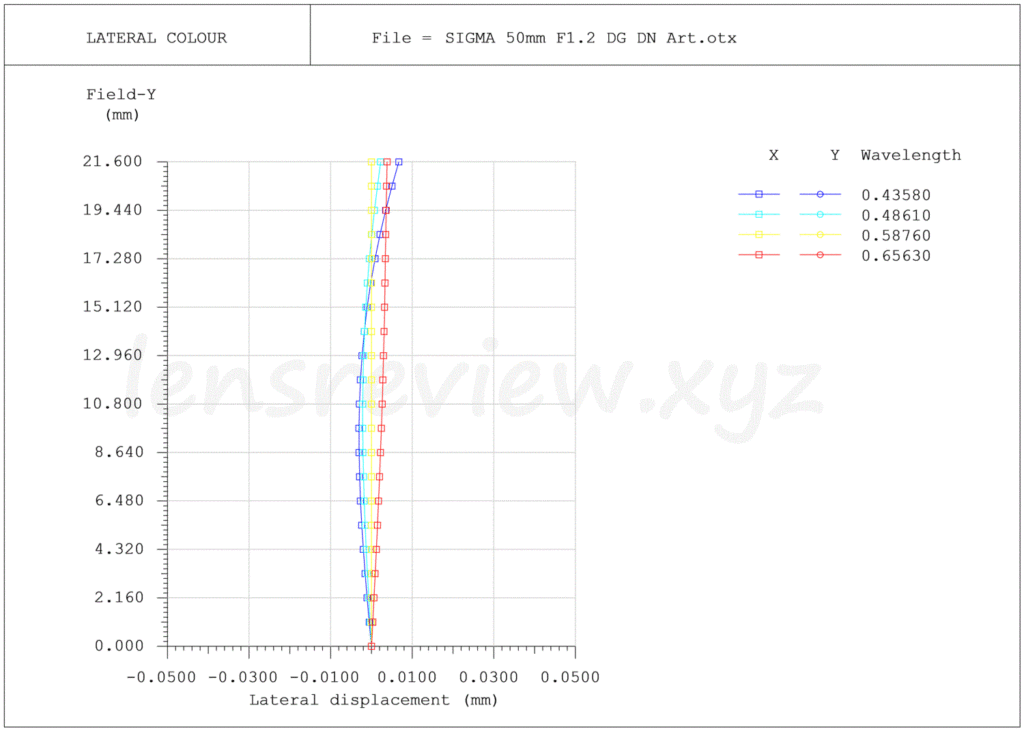
- Spherical Aberration: Corrected to a near-zero level. The straightness of the curve ensures that the focal plane is razor-sharp at F1.2 without the "softness" often associated with vintage ultra-fast lenses.
- Axial Chromatic Aberration: Extremely well-suppressed. Even in high-contrast backlit situations, the purple and green fringing at the focal plane is virtually non-existent.
- Field Curvature: The curvature is kept flat across the entire image height. This ensures that when shooting architecture or flat subjects, the corners remain as sharp as the center.
Transverse Aberrations
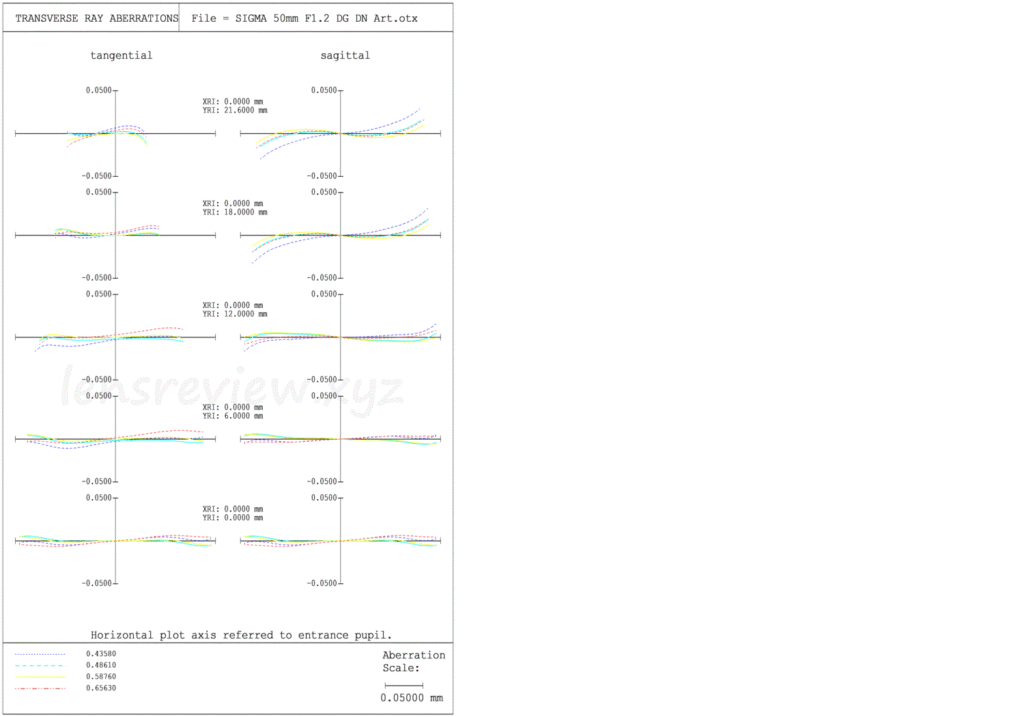
The sagittal coma flare is remarkably controlled. In typical F1.2 designs, point light sources in the corners often distort into "bird-like" shapes. SIGMA’s design keeps these flares compact, ensuring that nightscapes and starfields are rendered with high fidelity.
Spot Diagram Analysis
To evaluate the precision of the imaging, we analyze the spot diagrams using two distinct scales.
Standard Scale (0.3mm)
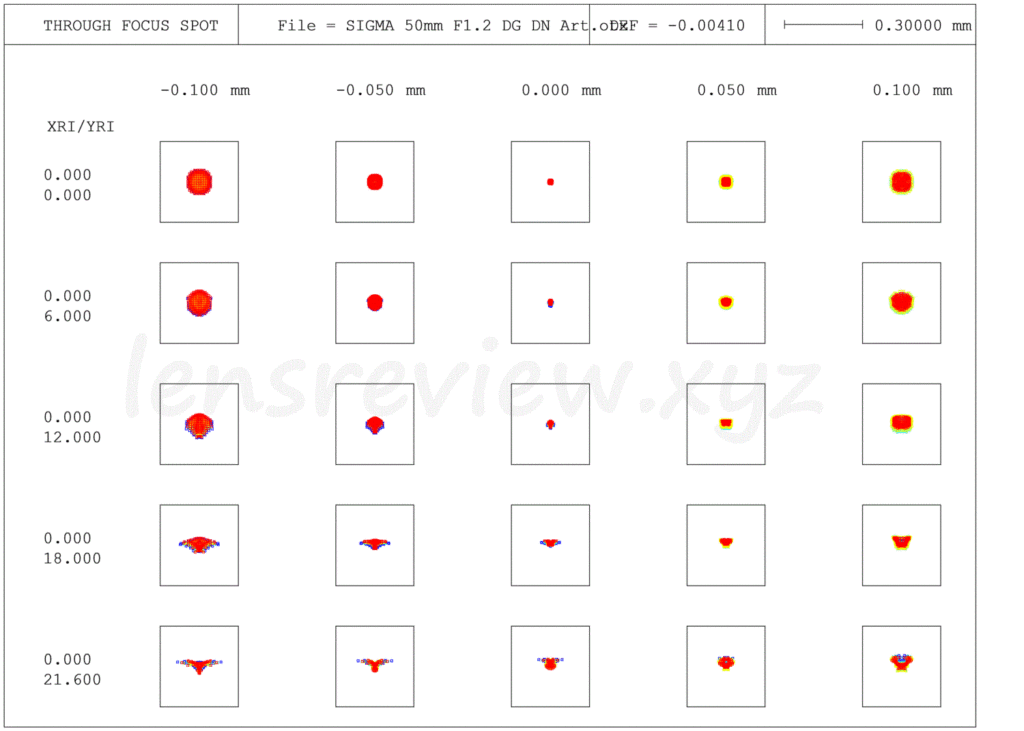
In the 0.3mm standard scale, which provides an overview of the macro-level imaging performance, the spots remain extremely compact across the entire frame. From the center to the 21mm periphery, the light rays are gathered into a single point with almost no visible flare, indicating outstanding global contrast.
Detail Scale (0.1mm)
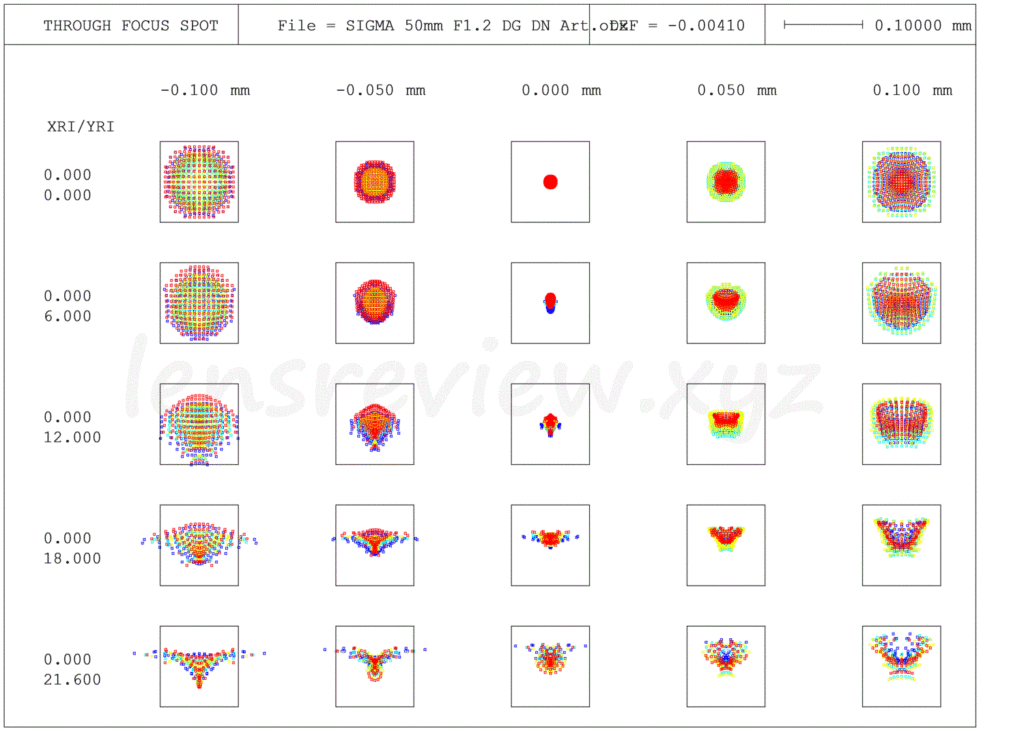
When we zoom in to the 0.1mm detail scale for a more microscopic evaluation:
- Center: The concentration of light rays is exceptionally dense, showing the high precision of the aspherical surfaces and minimal residual spherical aberration.
- Periphery: While a slight expansion is naturally visible due to the F1.2 aperture, the spots maintain a high degree of symmetry. This symmetry is the key to the Art series' "natural bokeh," ensuring that blurred points of light remain clean and circular without harsh, distracting edges.
Optical Simulation (MTF)
At Maximum Aperture (F1.2)
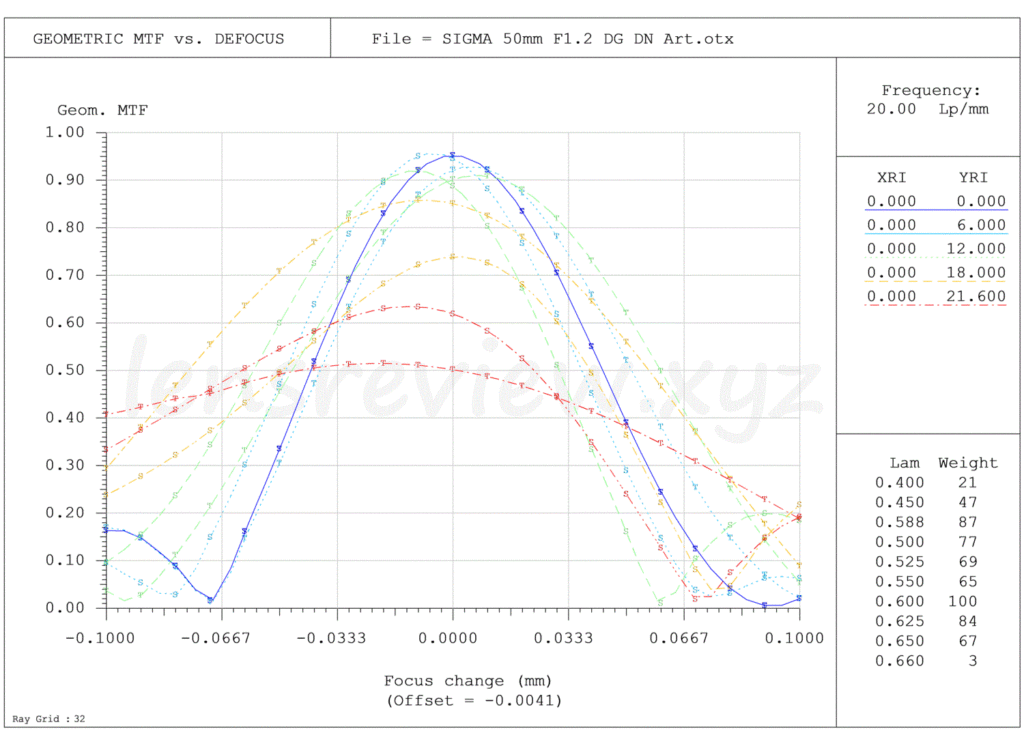
The MTF chart at F1.2 reveals that the 10 lines/mm curve is nearly flat at the top, while the 30 lines/mm curve maintains high values even toward the periphery. The minimal gap between sagittal and tangential lines indicates the absence of significant astigmatism.
Stopped Down (F2.8 - F4.0)
F2.8
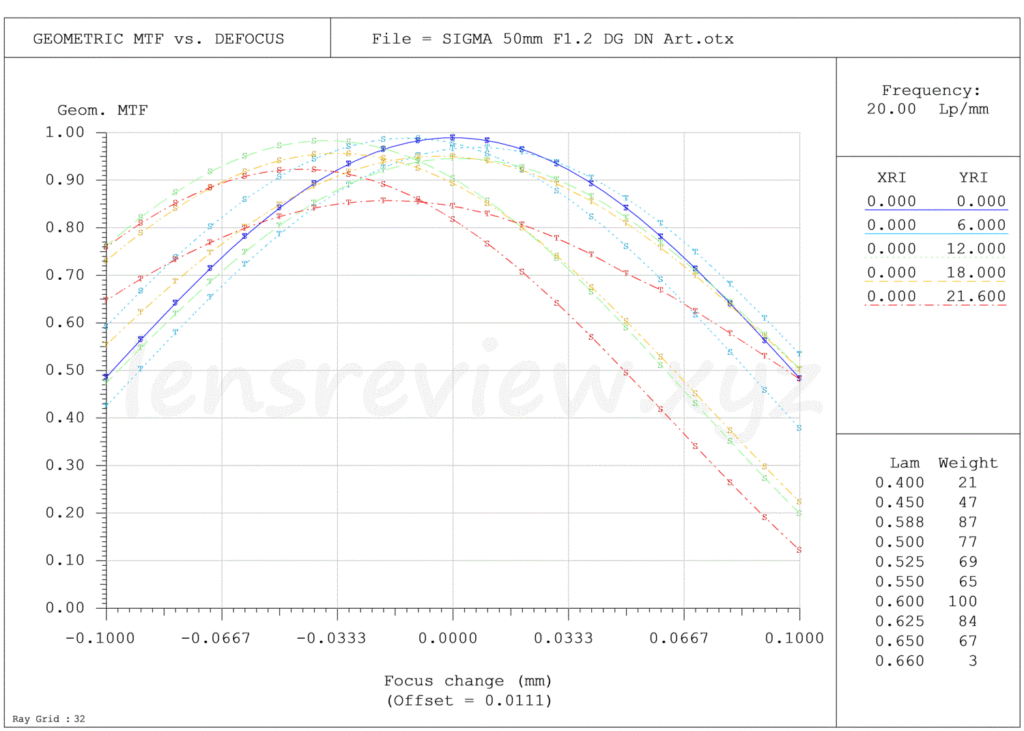
F4.0
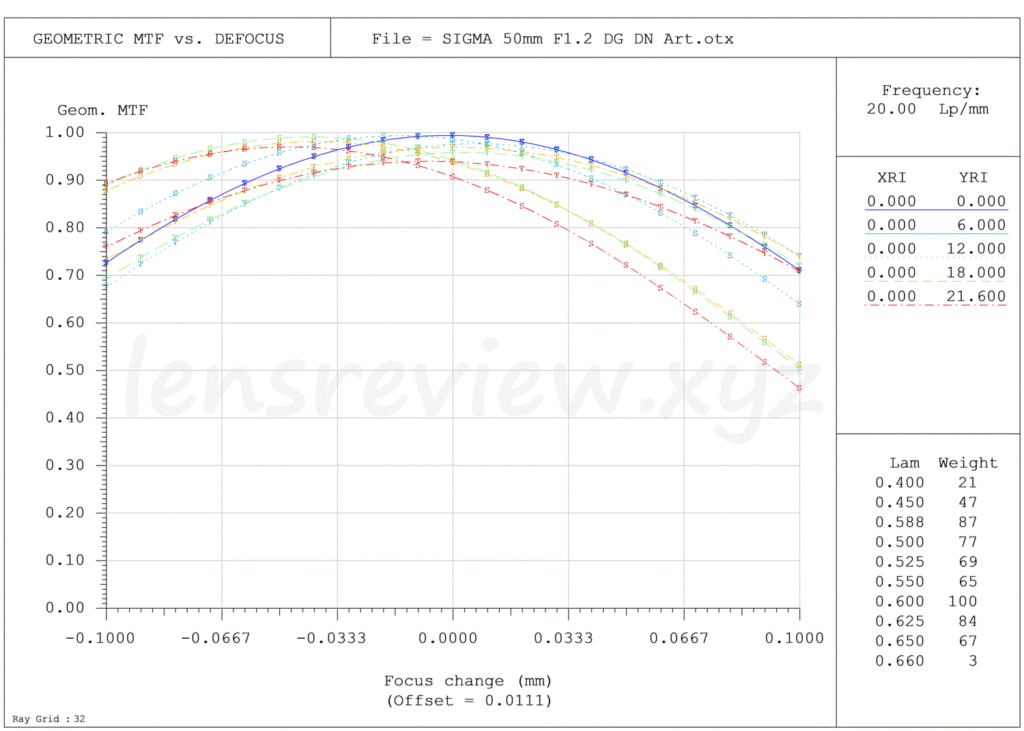
By F2.8, the lens enters a "super-resolution" zone. By F4.0, it reaches the theoretical diffraction limit, proving that this lens is designed to provide professional-grade results from its widest aperture.
Conclusion
The SIGMA 50mm F1.2 DG DN Art represents the pinnacle of modern standard primes. It succeeds in the difficult task of providing an F1.2 aperture, supreme resolution, and manageable weight. For those seeking the ultimate 50mm, this "Made in Aizu" masterpiece is a definitive choice.
Product Specifications
| Item | Specification |
| Lens Construction | 17 elements in 12 groups |
| Minimum Aperture | F16 |
| Closest Focusing Distance | 0.4m |
| Filter Size | 72mm |
| Weight | 745g (L-Mount) |
Author: Jin Takayama
Professional optical designer with over 40 years of experience. Chairperson of the Lens Review Consortium and operator of a specialized optical design office.

